
Kotor, Montenegro: A Complete Guide to History, Things to Do, Where to Stay and More
Kotor, Montenegro, is a walled medieval town at the far end of the Bay of Kotor. This UNESCO-listed site is surrounded by mountains that rise straight out of the water behind it. Inside the walls sit stone lanes, old churches and squares barely wider than a room. This Kotor guide covers all of it. History in short, then how to arrive. After that, what to see here and nearby, plus weather and where to stay.
We manage apartments across Kotor and the wider Kotor bay ourselves. So the practical parts here come from daily experience, not a quick skim of other guides.
Why Kotor Is Worth Visiting
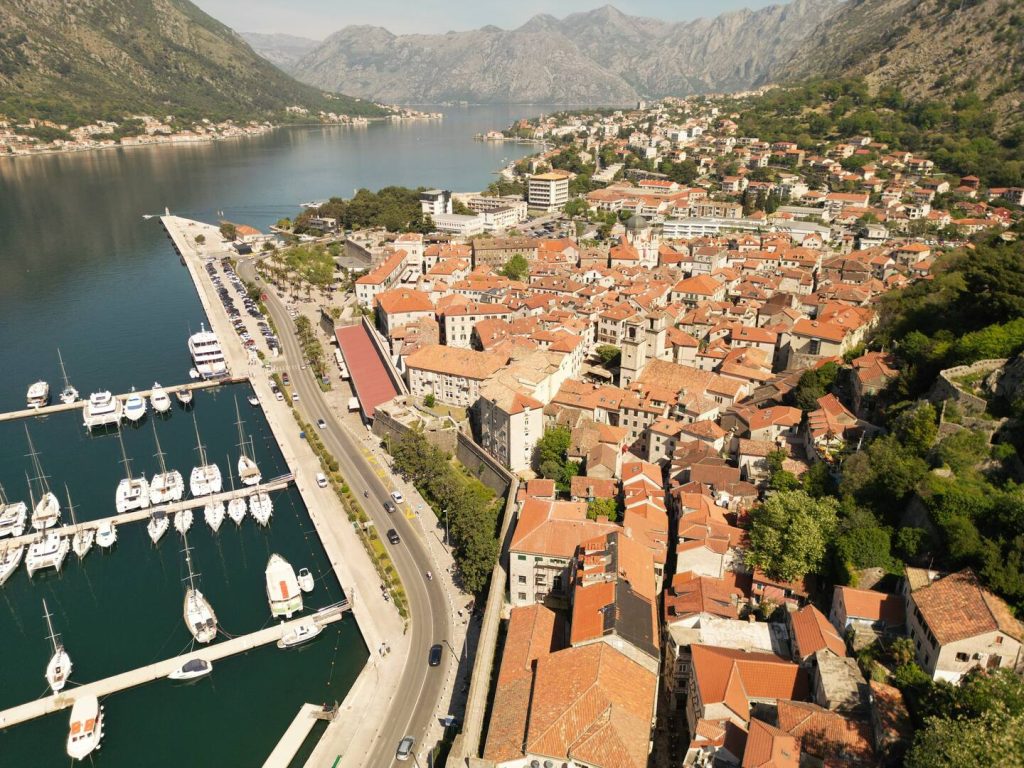
Kotor packs an unusual amount into a very small footprint. The old town measures only a few hundred meters across. Yet it holds a cathedral from 1166, a fortress climb of 1350 steps, and a UNESCO listing. People often call the bay Europe’s southernmost fjord. In truth, it is a drowned river canyon, which explains the shape better.
The History of Kotor in Short
Few towns this size carry so many rulers in their record. Kotor has been Illyrian, Roman, Byzantine, Serbian, Venetian, French, and Austrian.
Illyrians and Romans
Illyrian tribes settled the Kotor area first, likely by the 5th century BC. The town then enters the written record in 168 BC, under the Roman name Acruvium.
Byzantium and Medieval Serbia
After Rome fell, Kotor passed to Byzantium, and Emperor Justinian built a fortress above it in 535. From 1185, the Nemanjić dynasty ruled here, gave the town its modern name, and made it their main seaport.
The Venetian Centuries
Facing the Ottoman threat, Kotor’s own council voted to hand the town to Venice in 1420. Venetian rule lasted until 1797. It shaped the gates, the bastions, and much of the street plan you walk today.
France, Austria and Modern Montenegro
Napoleonic France held Kotor briefly from 1807. Austria then ruled until 1918, leaving its own mark on the fortifications throughout the Boka Bay area.
The 1979 Earthquake and the UNESCO Listing
A major earthquake struck on the 15th of April 1979 and damaged Kotor severely. UNESCO inscribed the region that year and placed it on the Danger List. It came off that list in 2003, after decades of local restoration.
Getting to Kotor
The easiest ways to get to Kotor are by plane (nearby Tivat Airport), by car, or by bus.
Tivat Airport to Kotor
Tivat is the closest airport to Kotor, roughly 8 kilometers away. The drive takes about 15 to 20 minutes. There is no direct bus from the terminal itself, so plan on a taxi or a booked transfer. Prices vary by operator, though most quotes land between 20 and 30 euros. Tivat Airport is some 3 km away from Tivat Bus Station so you can walk or take taxi to reach it. Ask the fare before you get in, since meters are not always used.
Podgorica and Dubrovnik Airports to Kotor
Podgorica airport sits about an hour and a half from Kotor by car. Dubrovnik in Croatia is a common arrival point too, but it takes significantly longer – even though it is roughly 90 km away. Expect heavy border traffic during the summer, and the waiting times are often more than 2 hours. Factor that in if you have an early ferry or tour booked.
Buses to Kotor and Getting Around
Kotor bus station sits just outside the walls, a few minutes on foot from the Main Gate. Coastal buses run regularly to Budva, Tivat, Herceg Novi and Perast. Tickets are cheap, usually a few euros for short hops. Inside Kotor itself, you will not need transport at all, since nothing is more than ten minutes away.
If taking a bus to Perast, take the local Blue Line Bus. The most common departure point is the Bus Stop to Perast and Risan, just outside Kotor Old Town.
Driving and Parking in Kotor and the Bay of Kotor
Driving around the bay is straightforward outside peak season. The Lepetane to Kamenari ferry saves a long loop, at about 5 euros for a ten-minute crossing. No cars enter the Kotor Old Town at any point. Paid parking is available around the Old Town, at roughly 3 to 6 euros an hour. Try Benovo Parking or Riva Parking, as they are the closest ones. Look for the daily fee if staying longer. Parking prices may vary due to seasonality.
What to See in Kotor Old Town
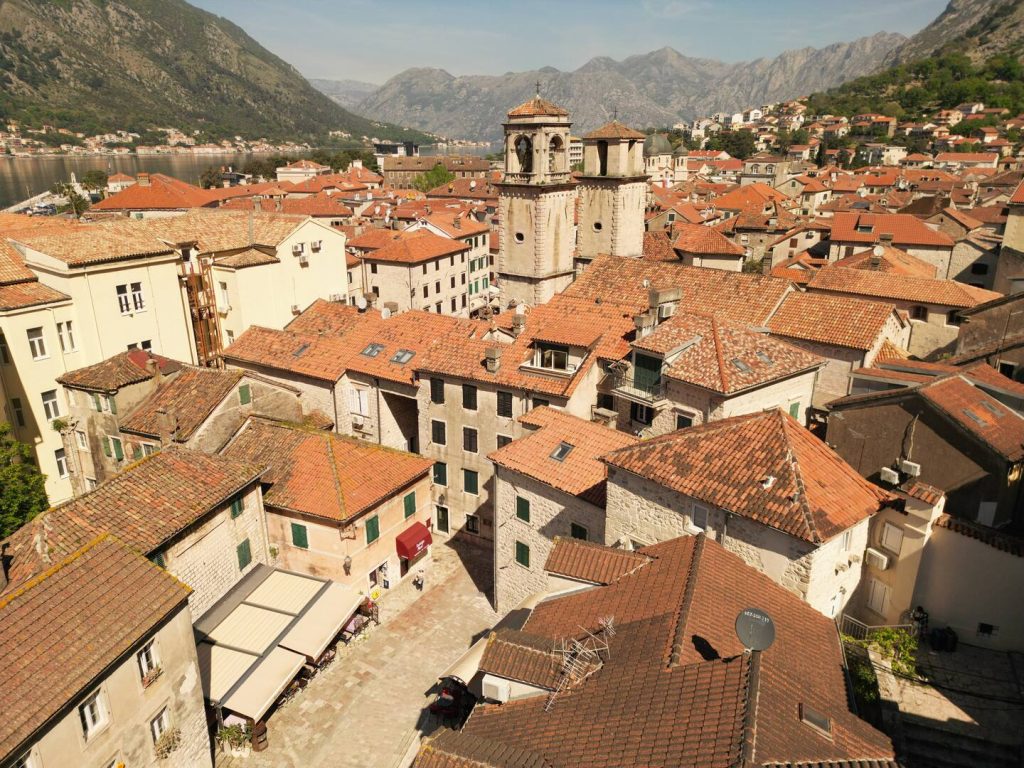
When visiting Kotor Old Town, do not miss out on its Cathedral, City Walls, Maritime Museum, pet a few cats, and visit its Churches.
The Three City Gates of Kotor
Kotor has three main entrances, and each one has its own character. The Sea Gate, or Main Gate, opens onto the waterfront and the cruise berth. The River Gate sits at the north end beside the Škurda River. Gurdić Gate closes the southern side above a spring.
The Cathedral of Saint Tryphon in Kotor
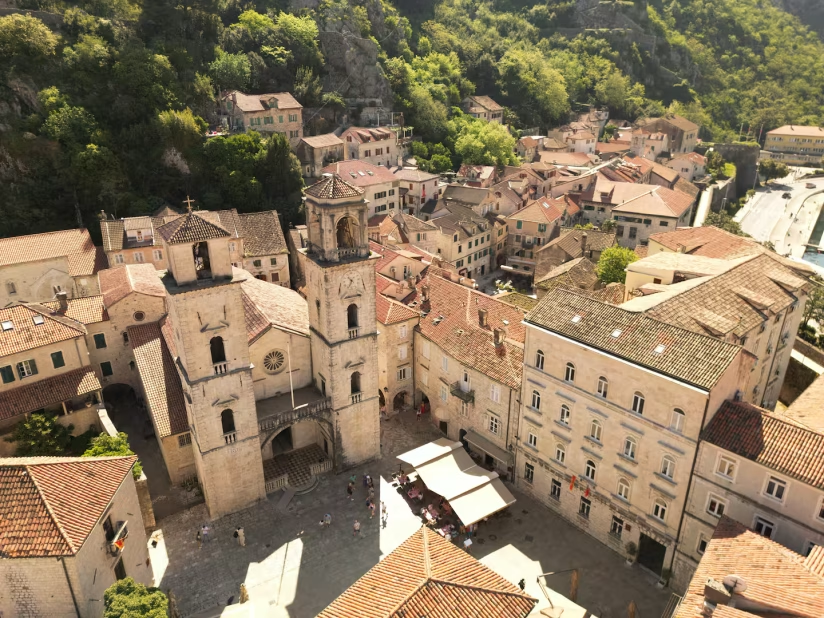
Kotor’s Saint Tryphon Cathedral is the oldest preserved cathedral on the eastern Adriatic coast. Builders consecrated it in 1166, on the site of an earlier church which was built in 809. The 1667 earthquake destroyed its original bell towers, and crews rebuilt them in Baroque style. That is why the two towers do not match. Look up, and you will see two dates carved there: 1166 on the left tower and 2016 on the right. Inside, there are Byzantine frescoes, a sacral art museum, and the relics of the saint.
The City Walls and San Giovanni Fortress
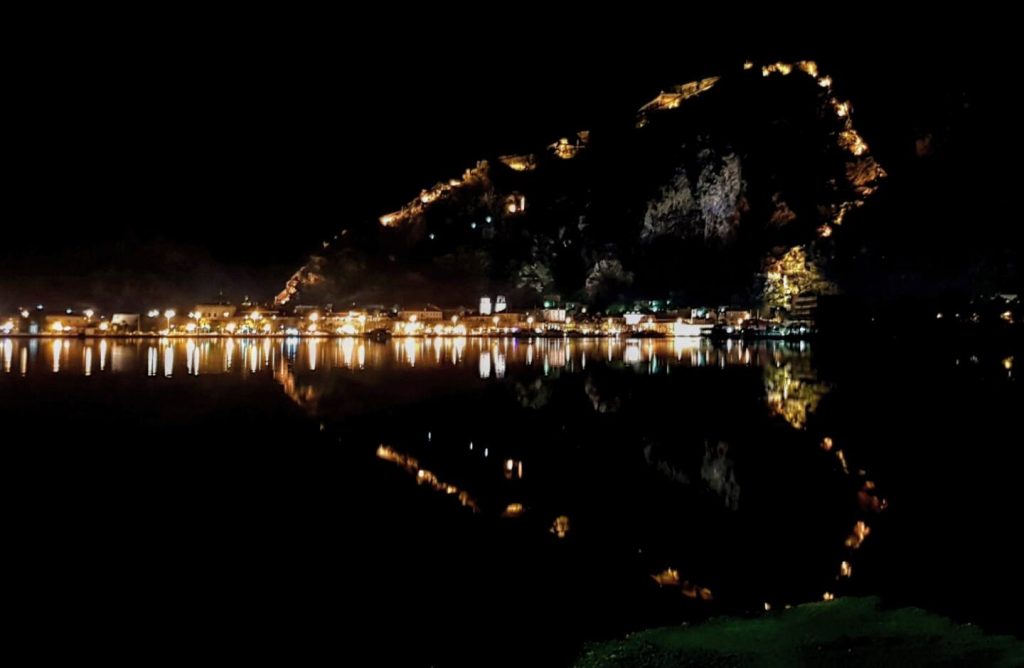
The walls climb the mountain above Kotor in a long zigzag. Reaching San Giovanni Fortress takes 1350 stone steps, rising about 280 meters. Most people need 45 to 60 minutes to go up. Entry costs 15 euros per person, cash only, so bring notes rather than a card. Start early in summer, since the upper stretch has almost no shade. The old free route through the Ladder of Kotor is sealed off now.
The Squares, Palaces and the Clock Tower
The Square of Arms is the main square in Kotor, right inside the Sea Gate. The Clock Tower stands there, with the old pillory stone at its base. Venetian family palaces line the lanes around it, including the Pima, Drago, and Bizanti houses. Most are private now, though their facades and courtyards are the point.
The Maritime Museum of Montenegro
Kotor made its money at sea for centuries, and this museum tells that story. It sits inside the Baroque Grgurina Palace on its own square. Ship models, navigation instruments, old charts and uniforms fill three floors. One section covers the Boka Navy, a maritime brotherhood over a thousand years old.
The Eastern Orthodox Churches of Kotor
Kotor’s Church of Saint Luke dates to 1195, among the oldest in the region. Saint Nicholas stands across the same square, an Orthodox church with two dark domes. Saint Mary Collegiate sits in the northeast corner of the walls. Each takes ten minutes, so all three fit into one walk.
The Cats of Kotor

Cats are part of Kotor’s identity, and locals look after them properly. There is even a small cat museum tucked into one of the squares. Entry money and shop sales go toward feeding the town’s strays.
What to See From Kotor: The Bay of Kotor
When in Kotor, make sure to do some trips to nearby Perast and the Blue Cave. Visit the Our Lady of the Rocks island on a boat tour, swim in the middle of the bay, and play around with the shimmering blue lights of the Blue Cave.
Perast and Our Lady of the Rocks
Perast is the easiest trip from Kotor, about fifteen minutes up the coast. It is a small Baroque town with no walls and direct views of two islets. Short boats run out to Our Lady of the Rocks, an artificial island built on sunken stones. Sailors have added stones there for centuries after safe returns. The neighboring island of Saint George holds a Benedictine monastery and cypress trees.
The Blue Cave, Mamula and the Submarine Tunnels
Longer boat trips leave Kotor for the outer bay most mornings. The Blue Cave is the usual highlight, a sea cave that glows on a bright day. Many routes also pass Mamula, an island fortress from the Austrian era now turned into a 5* luxury hotel. The old Yugoslav submarine tunnels cut into the cliffs are another regular stop.
Risan, Prčanj and Gornji Stoliv
Risan is the oldest settlement on the Kotor bay and holds Roman mosaics from the 2nd century. Prčanj has a huge waterfront church that looks oversized for the village behind it. Gornji Stoliv is the quiet one, an almost abandoned hamlet above the bay. You reach it on foot, through chestnut woods.
Tivat and Porto Montenegro
Tivat sits twenty minutes from Kotor and feels completely different. Porto Montenegro is the draw, a super yacht marina with modern cafes and shops. It makes a good contrast after several days among medieval stone.
Kotor as a Base for Exploring Montenegro
Montenegro is small, which makes Kotor a strong base for the whole country. Almost everything below works as a day trip and returns you to the same apartment each night. That saves both packing time and repeat check-ins.
Lovćen National Park and Njeguši
Lovćen rises directly behind Kotor and takes about an hour to reach by car. The road is the famous serpentine, with 25 hairpin bends and wide views back over the bay. At the summit, 461 steps lead to the Njegoš Mausoleum. Stop in Njeguši village on the way for pršut and mountain cheese.
Cetinje and Lipa Cave
Cetinje is the old royal capital, about 45 minutes inland from Kotor. It holds the monastery, the National Museum, and King Nikola’s palace. Lipa Cave sits nearby and runs guided tours through large underground chambers. It stays cold inside all year, so bring a layer even in August.
Skadarsko Lake
Skadar Lake is the largest lake in the Balkans, around an hour from Kotor. Boat tours leave from Virpazar through lily-covered channels and birdlife. Small wineries sit along the same road, which makes this a good pairing for one day.
Budva Riviera and Sveti Stefan
Budva is half an hour from Kotor and brings the beaches and the nightlife. Its own old town is smaller but worth an hour. Sveti Stefan, a little further south, is the island village you have seen in photographs. You can photograph it from the road, though the island itself is private.
Outdoor Things to Do Around Kotor
Kotor is action-packed. From hiking, canyoning, and via feratta to plenty of water activities. Make sure to make the most of your stay.
The Kotor Cable Car
The Kotor Cable Car climbs from Dub up toward Mount Lovćen in about 11 minutes. A return ticket runs around 20 euros for an adult. At the top there are restaurants, wide views, an alpine coaster and a zipline. High winds do pause the service, so check before building a day around it.
Hiking, Kayaking and Cycling
The Ladder of Kotor is the serious hike here, a few hours up and back. It follows an old caravan route toward Njeguši and the mountains. Kayaks rent for roughly 20 to 25 euros a day around Kotor. Paddling toward Perast takes about ninety minutes each way. For cycling, Vrmac is the main hill, with downhill routes ending in Kotor or Tivat.
Canyoning and Rafting
Škurda canyon starts right behind the Kotor walls and offers guided canyoning trips in summer. Expect swimming, scrambling, and a few jumps. For something bigger, Tara River rafting runs from spring into early autumn.
Weather in Kotor, Montenegro
Kotor has a Mediterranean climate with hot summers and mild, wet winters. July and August are the hottest months, with highs commonly in the high twenties. January is the coldest, with daytime highs closer to the low teens. Sea temperatures peak around 25 degrees in August. In winter, the water drops to roughly 14 degrees.
One figure surprises most visitors. Kotor is among the wettest places in Europe, with well over a meter of rain a year. November and December are the wettest months by a clear margin. July is the driest. So a winter visit to Kotor means packing for real rain, not a light jacket.
The Best Time to Visit Kotor
May, June, September and early October are the best months to visit Kotor. Temperatures stay comfortable, the sea is warm enough, and the crowds thin out. July and August bring the best swimming and the biggest festivals. But they also bring peak heat, peak prices, and heavy cruise traffic. April and late October are quieter still, though rain becomes more likely.
Cruise ships shape the rhythm of a Kotor day more than the calendar does. Passengers fill the old town from mid-morning to early afternoon. Evenings are calmer in every season, even in August.
Festivals and Events in Kotor
The Kotor calendar has real local events, not just summer concerts for visitors. The Feast of Saint Tryphon falls on 3 February. On that day, the Boka Navy performs its ceremonial kolo before the cathedral. The Kotor Winter Carnival follows in February, a masked tradition inherited from Venice. KotorArt runs from mid-July to mid-August across the old town. Boka Night, usually the third Saturday of August, is the biggest of them all. Decorated boats parade the harbour by lantern light, then fireworks close the night.
What to Eat in Kotor
Kotor sits between the sea and the mountains, and the food reflects both. Buzara is the dish to order first, shellfish stewed with garlic, wine and herbs. Crni rižot, black risotto colored with cuttlefish ink, is the other coastal staple. From the mountains come Njeguški pršut and Njeguški cheese, both from a village above Kotor. A Njeguški steak wraps that same ham and cheese inside veal or pork.
For something sweet, kotorska krempita is the local custard slice worth trying. Priganice, small fried dough balls, work well for breakfast. Drink Vranac if you want the national red, or Nikšićko for a simple beer. Check out our guide on the best restaurants in Kotor and bon appetite!
Where to Stay in Kotor
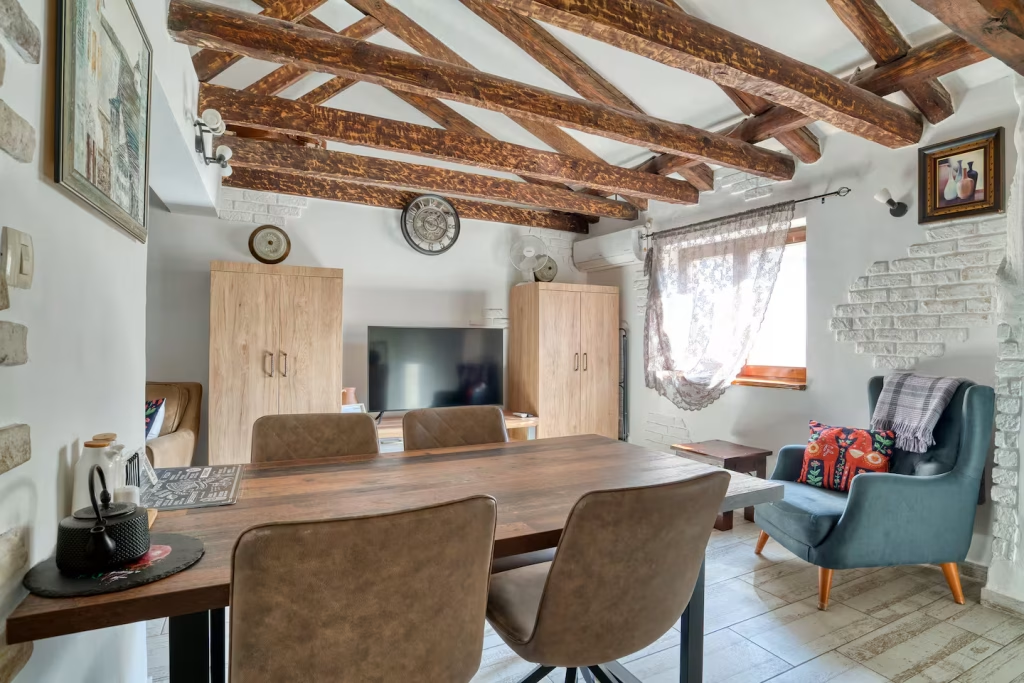
Where you sleep changes the trip more than anything else here. The choice comes down to walkability against space and parking. Below is how the main areas of Kotor actually compare.
Kotor Old Town: Where to Stay and Why
Staying inside the Kotor walls puts every restaurant and landmark minutes from your door. Evenings here are the reward, once the day crowds have gone. The trade-offs are real, though. No car can reach your door, buildings are old with stairs and no lifts, and weekends run a bit louder. Our studios like Lana and Ena suit couples, while Nanna fits a family of four.
Where to Stay in Dobrota
Dobrota stretches north along the water from Kotor, open and quiet. Mornings here are calm, and many buildings have real driveways. The old town is a pleasant walk along the shore or a short drive. It suits couples and anyone who wants the bay outside the window. Check out Maat and enjoy a modern apartment in Dobrota with a view.
Škaljari and Muo
These two sit just outside the Kotor walls and solve the parking problem directly. Camelot in Škaljari comes with a private garage and room for six. Cahaya, over in Muo, adds a shared pool, which is rare this close to town. Both work well for families and anyone driving around Montenegro. Perfect choice if you are looking for apartments with parking.
Perast and the Wider Bay
Apartments in Perast suit a slower two or three nights rather than a full week. It is quieter than Kotor, with direct views of the two islands offshore. Further round the water, Stoliv trades convenience for space and better value. Our Stolivood house there has a private pool and free parking beside it.
Practical Things Worth Knowing
A few realities catch Kotor visitors off guard. Montenegro uses the euro, though several sites, including the city walls, take cash only. Every beach around the bay is pebble, never sand. Tap water is safe to drink, but some find it heavy on the stomach in summer. The tourist tax runs about 1 euro per person per night, and not every host includes it. Save 112 as the emergency number, since it works without a SIM card.
Frequently Asked Questions
How many days do you need in Kotor?
Two days cover the Kotor old town and the fortress climb comfortably. Three or four lets you add Perast, the cable car, and a boat trip. A week works well if you use the town as a base for the rest of Montenegro.
Do you need a car in Kotor?
Not for Kotor itself, since the old town is closed to cars anyway. A car helps a lot for day trips inland, where buses run less often. If you rent one, book an apartment with parking outside the walls.
Is Kotor expensive?
Kotor is mid-range by Adriatic standards and clearly cheaper than Dubrovnik. Prices peak sharply in July and August. Shoulder season brings noticeably better value for the same weather.
Is Kotor worth visiting for just one day?
Yes, though you will have to choose. A one-day visit to Kotor covers the old town well. After that, pick either the fortress climb or a boat trip.
What is Kotor famous for?
Kotor is famous for its walled medieval old town, its UNESCO listing, and its fortress walls. The setting inside the bay, with mountains rising straight from the water, does the rest.
The Bottom Line: Is Kotor Worth Visiting?
Kotor rewards visitors who slow down and look properly. The history sits in plain view, from Roman foundations to Venetian gates to earthquake repairs. The bay handles the rest, whether you climb above it, paddle across it, or just sit by it. Better still, the whole country is close enough to reach and return the same day. Come in May, June, September, or early October if you can. Pick the area that matches how you want to spend your evenings. Then book the apartment that fits your group. Do that, and Kotor, Montenegro gives you far more than a day trip ever could.